
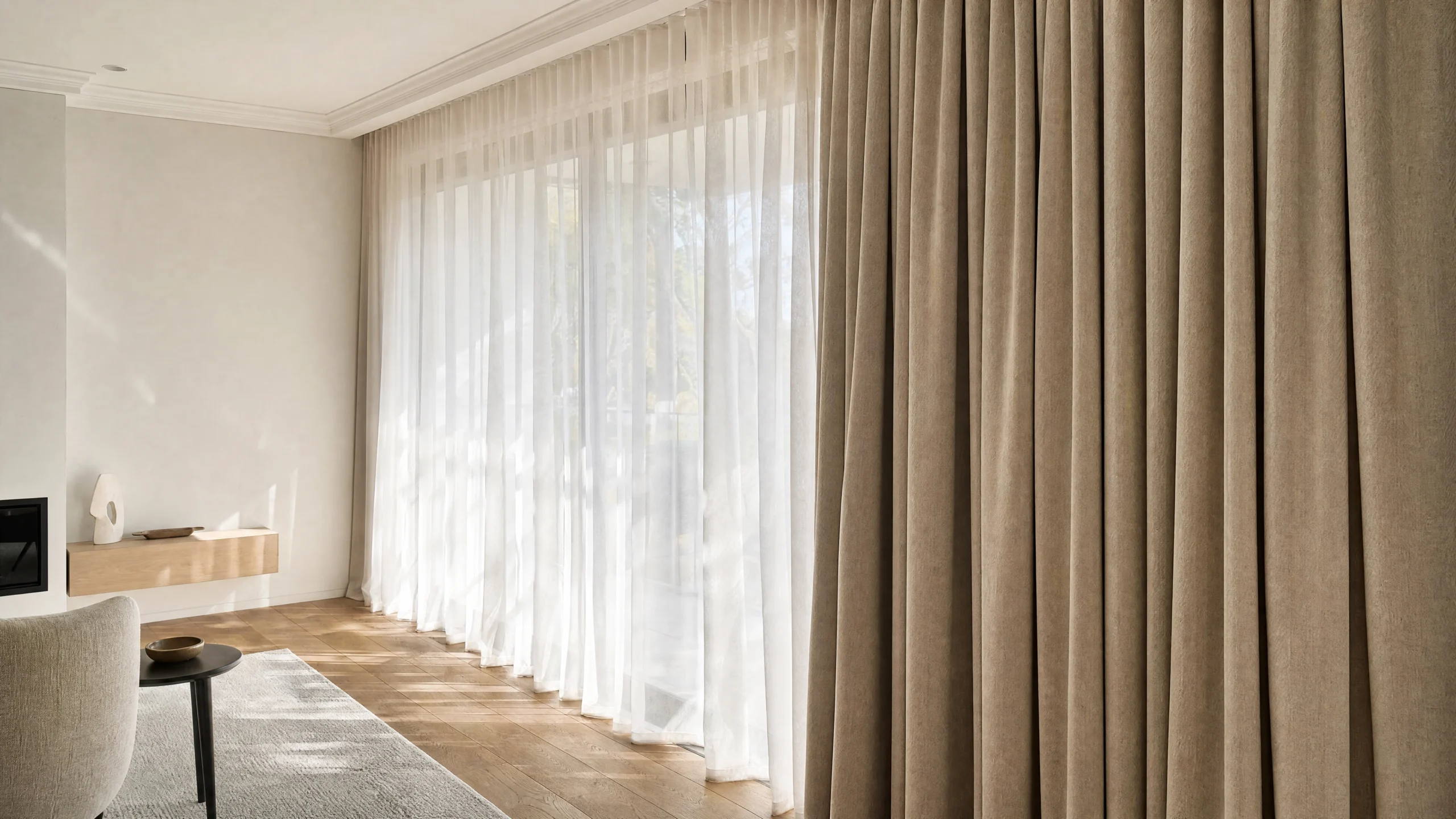
Have you ever seen two sets of curtains made from similar fabric and wondered why one looks rich and gathered while the other hangs almost flat? The difference may come down to how much fabric was used. This is known as curtain fullness, and it can change the appearance of a window more than you might expect.
What Does Curtain Fullness Mean?
Curtain fullness describes the amount of fabric used compared with the width of the curtain track. For example, if your track measures 2 metres and you use 4 metres of fabric, the fullness ratio is 2 times. That extra fabric creates the folds you see when the curtains are hanging. The exact amount you need depends on the heading style, fabric thickness and the look you prefer. A number that works for one set of curtains may not suit another.
What Happens When You Use More or Less Fabric?
Curtains made with less fabric tend to hang with fewer folds. This can suit someone who prefers a simple, understated finish, but too little fabric may leave the curtains looking stretched across the window.
Adding more fabric creates deeper folds and gives the curtains a fuller appearance. This can work particularly well in living rooms and bedrooms where the curtains are a visible part of the interior.
There is a practical side to consider, too. Fuller curtains usually take up more room when drawn open, and the additional fabric can increase the cost. Before choosing a fullness ratio, think about how much wall space is available beside the window.
Does Curtain Fabric Make a Difference?
Yes, because different fabrics fall in different ways. Sheer curtains are lightweight and often look appealing with soft, flowing folds. Blockout curtains are generally heavier, so their thickness can affect how the folds sit and how easily the curtains move.
The heading also matters. So folded curtains are designed to create a regular wave along the track, while other heading styles produce different shapes and spacing. The same amount of fabric will not necessarily create the same result with every heading.
How Do You Get the Measurements Right?
Start by measuring the curtain track rather than the glass. If the track extends beyond the window frame, use the full track width when working out the fabric requirement. This helps the curtains cover the intended area when closed. It is also worth deciding how the curtains should look when they are open and closed. A narrow window with limited wall space may need a different approach from a wide living room window. If you are comparing curtain and window furnishing options, consider the heading, fabric and available space together rather than choosing fabric width on its own.
Final Thoughts
Curtain fullness is not simply about making curtains look thicker. It affects the folds, how the fabric hangs and how much space the curtains occupy when open. Choosing the right amount starts with accurate measurements and a clear idea of the finish you want.