
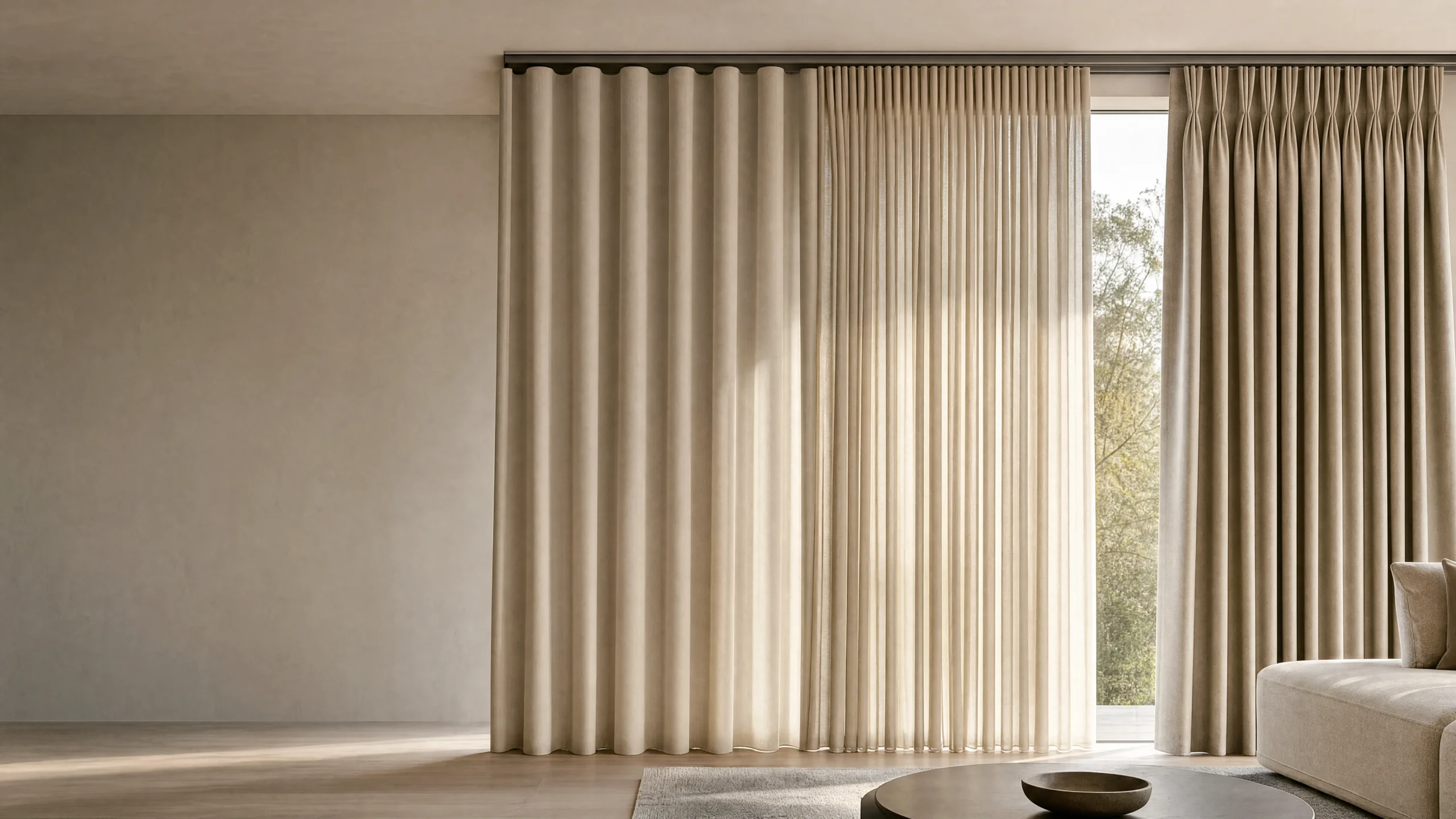
The heading at the top of a curtain changes more than its appearance. It affects how the fabric falls, how much space it takes up, and even the type of track or rod you need. That is why choosing between wave curtains, pencil pleat curtains and other curtain heading styles should happen before the fabric is ordered.
What is a curtain heading?
A curtain heading is the way fabric is gathered or attached at the top. It controls the shape of the curtain when it is open or closed. Some styles create a soft, regular fold, while others give the fabric a fuller, more traditional look. For a useful starting point, you can explore different window covering options and consider how the curtain will work with the rest of the room.
Wave heading for a clean, even fall
Wave curtains have become popular in modern homes because the fabric hangs in a continuous series of soft curves. The folds remain fairly consistent whether the curtains are open or closed, giving the window a neat appearance without looking overly formal. They work particularly well with a curtain track and are a practical choice when you want curtains to stack neatly to one side. Wave headings also suit large windows and sliding doors where a bulky heading can make the top of the window feel crowded.
Pencil pleat for a more traditional look
Pencil pleat curtains use tightly gathered fabric along the top, creating a narrow row of folds that resembles a line of pencils. The heading can be fitted to a track or curtain rod, which makes it a flexible option for different rooms. The amount of fabric used matters here. More fullness creates a richer appearance, while less fullness gives the curtain a simpler finish. Pencil pleats can work well when you want a classic curtain style without a heavily decorative heading.
What about pinch pleat curtains?
Pinch pleats are gathered into defined groups, creating a more structured fold from the top of the curtain down through the fabric. They tend to suit rooms where a more formal finish is wanted. Compared with wave headings, pinch pleats make the folds much more obvious. They also need enough fabric to maintain their shape, so measurements and curtain fullness need to be considered carefully.
Which curtain heading should you choose?
Think about how you want the curtain to hang every day. Wave headings suit a clean, contemporary look and frequent movement. Pencil pleats give you more flexibility and a familiar gathered finish. Pinch pleats are better suited to a more tailored appearance. The heading should also work with your window size, curtain track or rod, fabric weight and the amount of light you want to control. A beautiful fabric can still look wrong if the heading does not suit the way the curtain needs to operate.
Final Thoughts
Curtain heading styles are a small detail that can change the whole finish of a window. Before choosing fabric or colour, look at how the curtain will open, where it will stack and how much fullness the room can handle. Getting those practical details right usually makes the final result look much more considered.