After heavy rain, the problem with an outdoor area is not always the amount of water. It is where that water ends up. A puddle beside the house, damp patches under a planter, or water trapped against timber decking can all point to a drainage issue worth addressing before it causes further damage.
Follow the Water After Rain
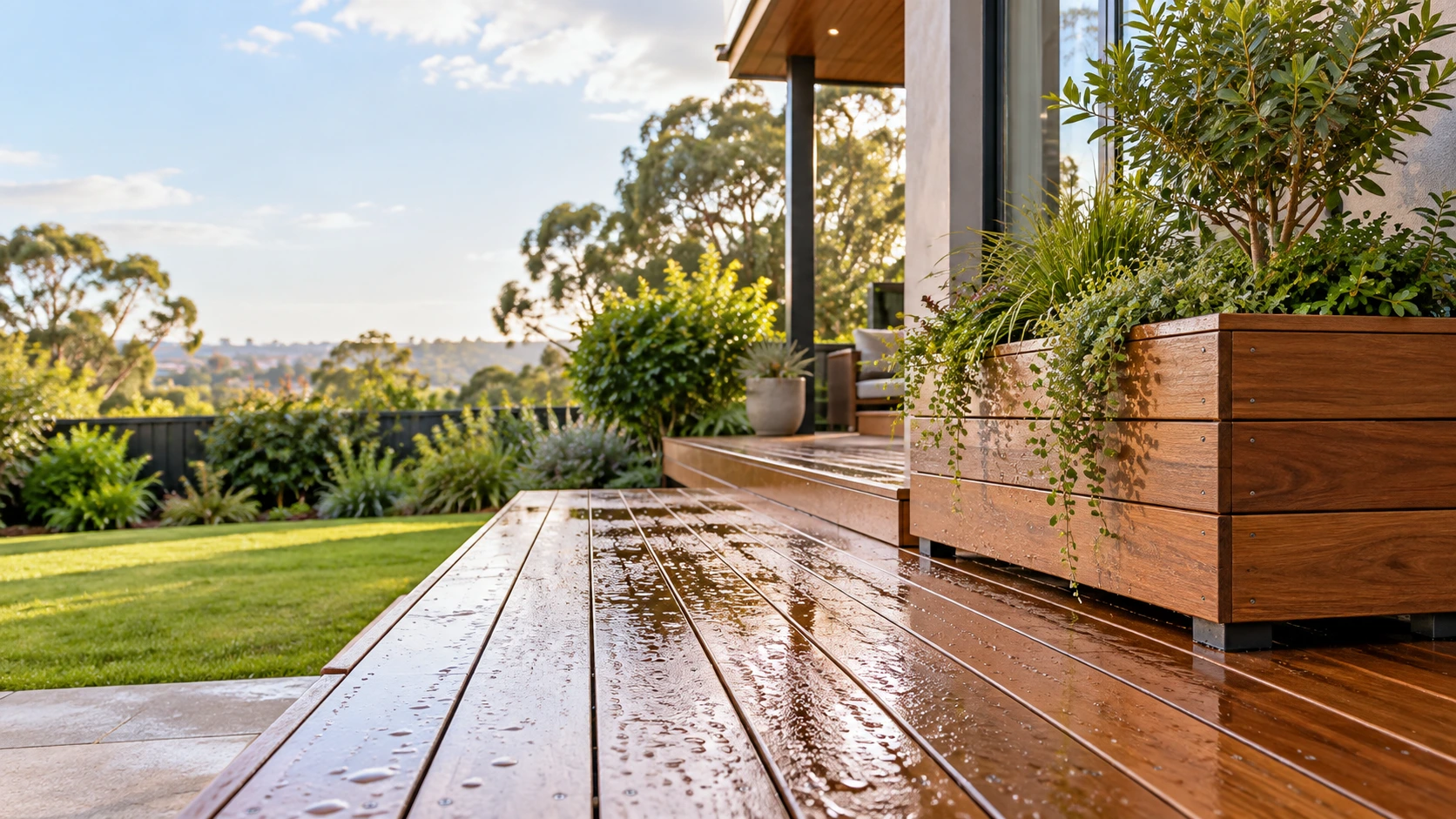
Look at the deck and garden after the next downpour. Does water run away from the house, or does it collect along the edge? Are leaves blocking the gaps between deck boards? Does water spill from a planter directly onto the same section of timber each time you water the plants?
These small observations help you spot where moisture lingers. Decking needs suitable gaps and ventilation so water can drain and the structure can dry. Spacing and falls depend on the decking system and installation, so avoid changing board gaps or adding drainage cuts without checking the construction requirements.
Planter Boxes Need an Exit for Excess Water
Plants need moisture, but their roots should not remain in saturated soil. Outdoor planter boxes need drainage openings to let excess water escape. Without them, water can accumulate at the base, harm plant health, and spill onto nearby paving or decking.
Positioning matters as well. A planter placed directly against a wall or on timber boards can leave the surrounding surface damp for long periods. Where appropriate, use a stable support that allows water to escape beneath the container, and keep drainage outlets clear of soil and mulch.
Balconies and raised structures require extra care. Large containers filled with wet soil can be heavy, and built-in planter boxes need properly designed drainage and waterproofing. If water is leaking into the structure below, the issue may require a qualified building or waterproofing professional rather than a simple surface fix.
Keep Drainage Paths Clear
Leaves, mulch and garden debris can block the routes water needs to follow. Clear debris from the deck edges, inspect visible drainage outlets, and make sure downpipes direct water to an appropriate drainage point. Avoid redirecting runoff onto a neighboring property or towards the house.
When planning an outdoor upgrade, consider how decking and other outdoor solutions will work together. A layout should allow for drainage and maintenance, not just the finished appearance.
Final Thoughts
Good drainage is easiest to address before you install an outdoor area. If a deck or planter area already exists, start by finding where water collects and whether the drainage path is blocked. A suitable professional should assess persistent pooling, leaks, or movement in the structure.