The window behind your desk can be one of the nicest features in a home office. It brings in daylight, gives you a view and stops the room from feeling boxed in. Then the afternoon sun arrives, your screen turns into a mirror, and you find yourself leaning from side to side just to read an email.
This is where the right window furnishing makes a noticeable difference.
For a home office or study, the choice usually comes down to how the room behaves during the day. Consider the window’s direction, where the desk sits, and whether you need privacy.
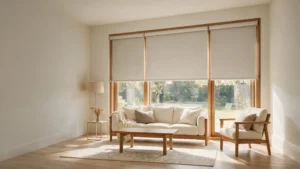
Roller Blinds Are a Good Starting Point
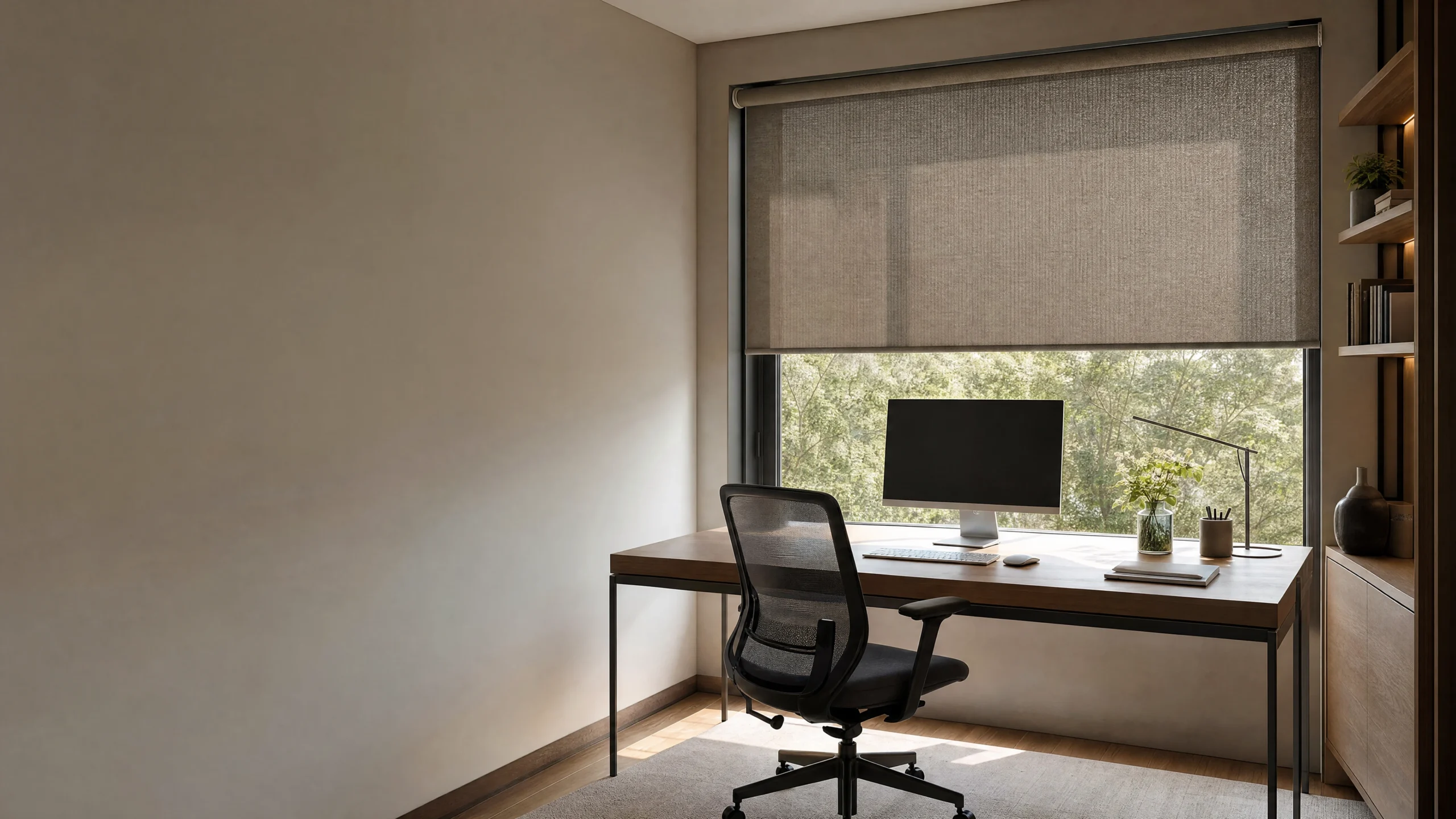
For many workspaces, roller blinds are hard to overlook. They have a simple look and don’t take up much space around the window. The main decision is the fabric. A light-filtering blind can soften strong daylight while keeping the room reasonably bright. If sunlight regularly lands across your monitor, a blockout blind may make more sense. There is also something to be said for being able to adjust the blind by a few centimetres. You do not always need the window completely covered. Sometimes lowering it just enough to cut the glare is all it takes.
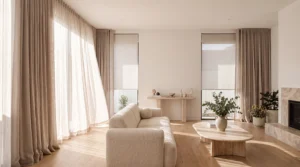
Curtains Suit Rooms That Do More Than Work
Not every study is a dedicated office. It might be a spare bedroom with a desk in one corner, a reading room or a shared family space. Curtains can make these rooms feel more comfortable by softening the harder lines created by desks, shelving, and flooring. They also make sense for larger windows where a small blind can look slightly lost. If the room gets a lot of sun, look at the fabric carefully. A beautiful curtain that lets excessive heat and glare through won’t help when you are trying to concentrate.
Shutters Give You More Control
Plantation shutters are worth considering when privacy is a priority. The adjustable louvres let you change the angle of the light without leaving the window completely exposed. That is handy for a study facing a footpath or neighbouring house. You can keep daylight coming in while limiting what people outside can see. They also have a more permanent feel, which can suit a home office that you plan to use for years rather than a temporary workspace.
Look at the Desk Before the Window
One of the simplest things to check is the relationship between the window and your desk. A monitor facing a bright window can suffer from reflections. A window directly behind you can make video calls awkward because the camera has to deal with strong backlighting. Even a side window can throw sunlight across the desk at certain times of the day. Before choosing your window covering, watch the room for a full day. Notice when the sun reaches the desk, where the glare appears and when privacy becomes an issue. home solutions for different rooms can then help you narrow down the right type of window furnishing.
Final Thoughts
You don’t need to choose a window covering just because it looks right in a showroom. Roller blinds are useful when straightforward light control is the priority. Curtains suit softer, more relaxed studies, while plantation shutters give you greater control over privacy and daylight. Start with what is happening at the window. The right choice usually becomes much clearer from there.