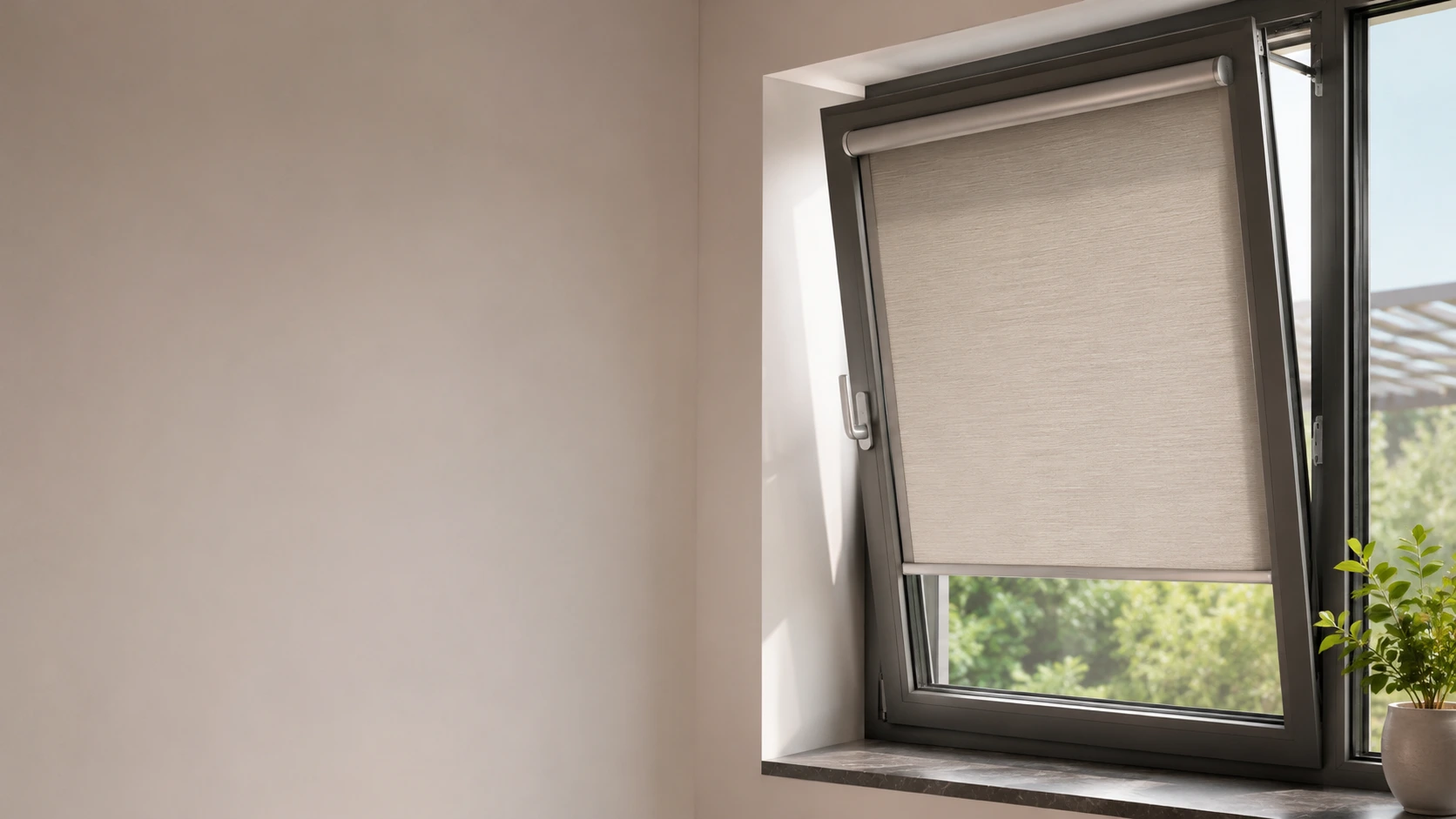
Tilt-and-turn windows are designed to open in two ways. The sash can tilt inwards from the top to let fresh air in, or swing fully into the room for access and cleaning. This makes them practical, but it also creates a challenge when choosing window coverings. A standard blind fitted above the window may get in the way when the sash moves. The good news is that blinds can be installed on many tilt-and-turn windows. The important part is choosing a fitting that works with the window’s movement.
Why Standard Blind Fittings May Not Work
A conventional roller blind is usually fixed to the wall or inside the window recess. When a tilt-and-turn window opens, its sash moves into the room and may hit the lowered blind. This can restrict the opening or cause the fabric to catch against the frame. Before choosing a blind, check how far the window opens, where the handle sits and how much clearance is available around the frame. These details help determine which installation method is suitable.
Blind Options Worth Considering
Sash-mounted blinds: These are attached directly to the moving window sash. Because the blind moves with the window, it can remain in place when the sash tilts or swings open, provided the fitting is compatible.
Perfect-fit systems: Some systems use a slim frame that clips onto compatible window frames, often those with a suitable rubber glazing bead. The blind sits close to the glass without needing a conventional wall fitting. However, not every frame profile or glazing depth will accept this system.
Recess or face-mounted blinds: A blind installed inside the recess or above the window may still work if there is enough clearance. In this arrangement, you may need to raise the blind before opening the window fully.
What Should You Check Before Installation?
The window frame material is a useful starting point. uPVC, aluminium and timber frames can require different fixing methods. Also consider the position of the handle, the depth of the glazing bead and whether the blind will interfere with ventilation.
Fabric choice matters too. A lightweight roller blind may be more practical than a bulky covering where space is limited. Accurate measurements are essential, particularly when the window has unusual dimensions.
Final Thoughts
Installing blinds on tilt-and-turn windows is possible, but the fitting should be selected around the way the sash operates. A suitable design can provide privacy and light control without making the window difficult to use. If you are unsure about frame compatibility, have the window assessed before ordering custom blinds.