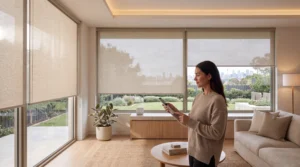
A window can need different things at different times of the day. You might want sunlight in the living room during the morning, less glare while watching television in the afternoon, and complete privacy once the lights are on at night. A single roller blind may not handle all three well. Dual roller blinds offer another option.
What Are Dual Roller Blinds?
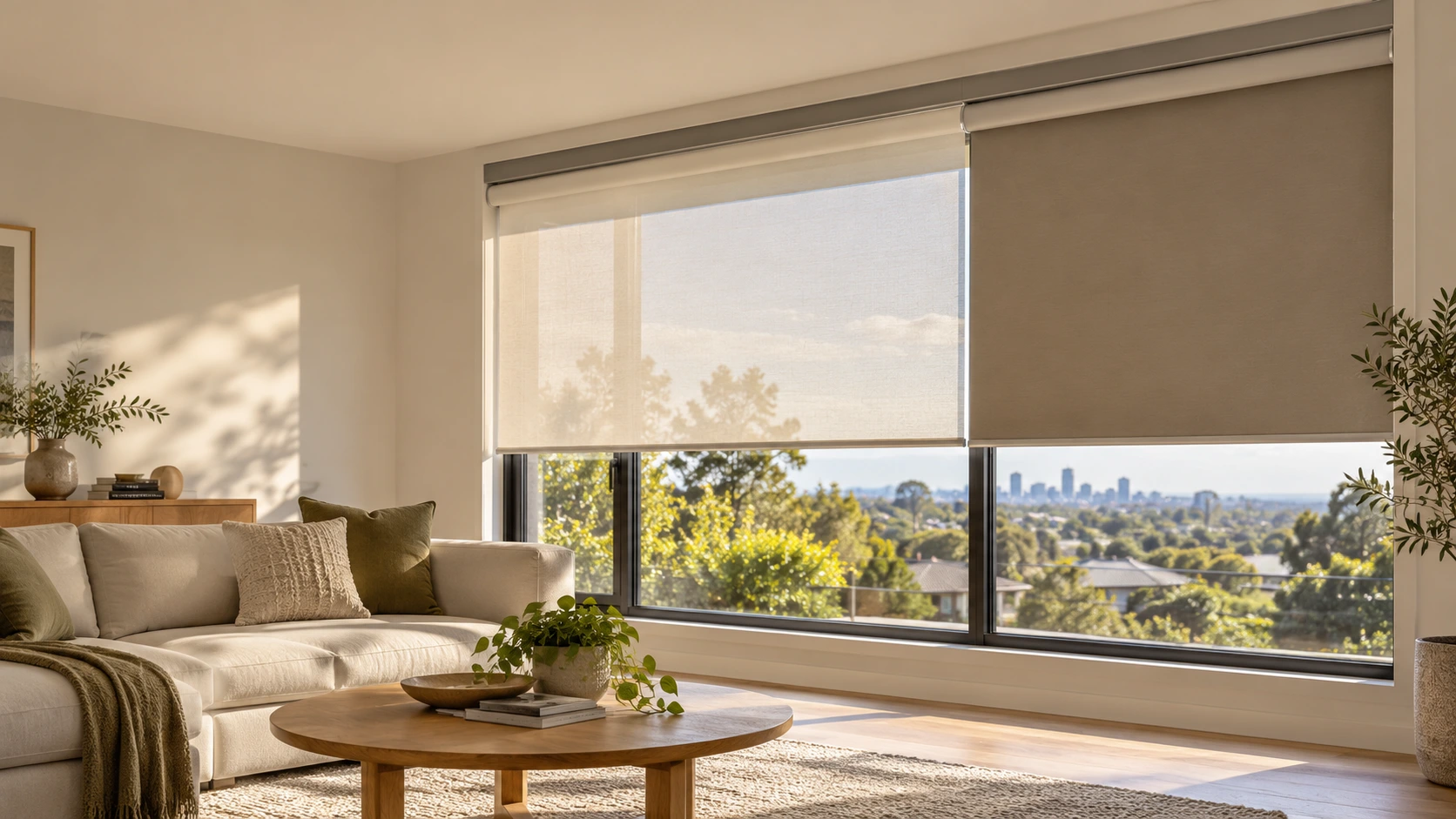
Dual roller blinds, also called double roller blinds, consist of two separate blinds fitted to the same window using a shared mounting system. Each blind has its own fabric roll, so you can raise or lower either layer without moving the other. Most setups pair a sunscreen or light filtering blind with a blockout blind. The first helps manage daylight, while the second provides greater privacy and blocks most incoming light when lowered. Both layers sit close together at the top of the window. When they are raised, the window remains uncovered. You can also lower both when you need more control over the light entering the room.
How Do Dual Roller Blinds Work?
Each blind operates independently, usually through its own chain or motorised control. The fabric you choose determines how much light enters the room and how much of the outside view remains visible. During the day, a sunscreen blind can reduce glare while allowing you to see outside. This is useful in living rooms and home offices, particularly when sunlight falls directly on a television or computer screen.
When evening arrives, the blockout layer can be lowered for greater privacy. It also helps darken bedrooms and other spaces where unwanted light is a concern. You can leave the daytime blind raised or use both layers together, depending on the conditions. The main advantage is having two different fabrics available at the same window without installing two entirely separate window covering systems.
What Should You Consider Before Choosing Them?
Start with the amount of light the room receives and the privacy you need after dark. Sunscreen fabric generally preserves more of the outside view during daylight, while light filtering fabric softens incoming light and offers less visibility. Blockout fabric is better when darkness is the priority.
Remember that blockout fabric does not always mean complete darkness. Small gaps around the edges of a roller blind can still allow light through. The combined blind system also needs more space at the top of the window than a single roller blind. Check the available mounting space before choosing an inside or outside window frame installation.
Final Thoughts
Dual roller blinds are worth considering when one window needs to serve different purposes throughout the day. Choosing the right fabric for each layer matters more than simply having two blinds. Think about daytime glare, evening privacy and how dark you need the room to become before deciding which combination suits your home.