A window covering can look harmless until you notice what is within a child’s reach. A loose cord beside a bed, a chain hanging near a chair, or a window that becomes accessible after moving furniture can change a room’s safety. That is why choosing window coverings for a home with young children takes more thought than simply picking a fabric or color.
II. What Should You Actually Look For?
When choosing child-safe window coverings, pay attention to the parts a child can touch. Cords and chains are obvious, but the window’s position matters too. Ask yourself a simple question: if a child wanted to reach the covering, what could they use to get there?
A bed, chair or sofa placed below a window can make a cord accessible when it was previously out of reach. In a child’s bedroom, this is particularly important because beds and cots are often close to windows. The aim is to keep operating cords and chains out of reach.
III. Which Window Coverings Are Suitable?
Roller blinds, curtains and plantation shutters can all be used in a home with children. The safer choice depends less on the covering’s name and more on how it operates in that room.
For example, a roller blind may be perfectly suitable when its operating components are properly managed. Curtains need the same attention if they have cords or chains. Plantation shutters offer another option where you want to control light and privacy without relying on a hanging curtain.
So rather than asking, “Which product is safest?”, it is more useful to ask, “How will this covering work in this room, and what will my child be able to reach?”
IV. The Room Can Change the Answer
The same window covering may work well in one room and require more care in another.
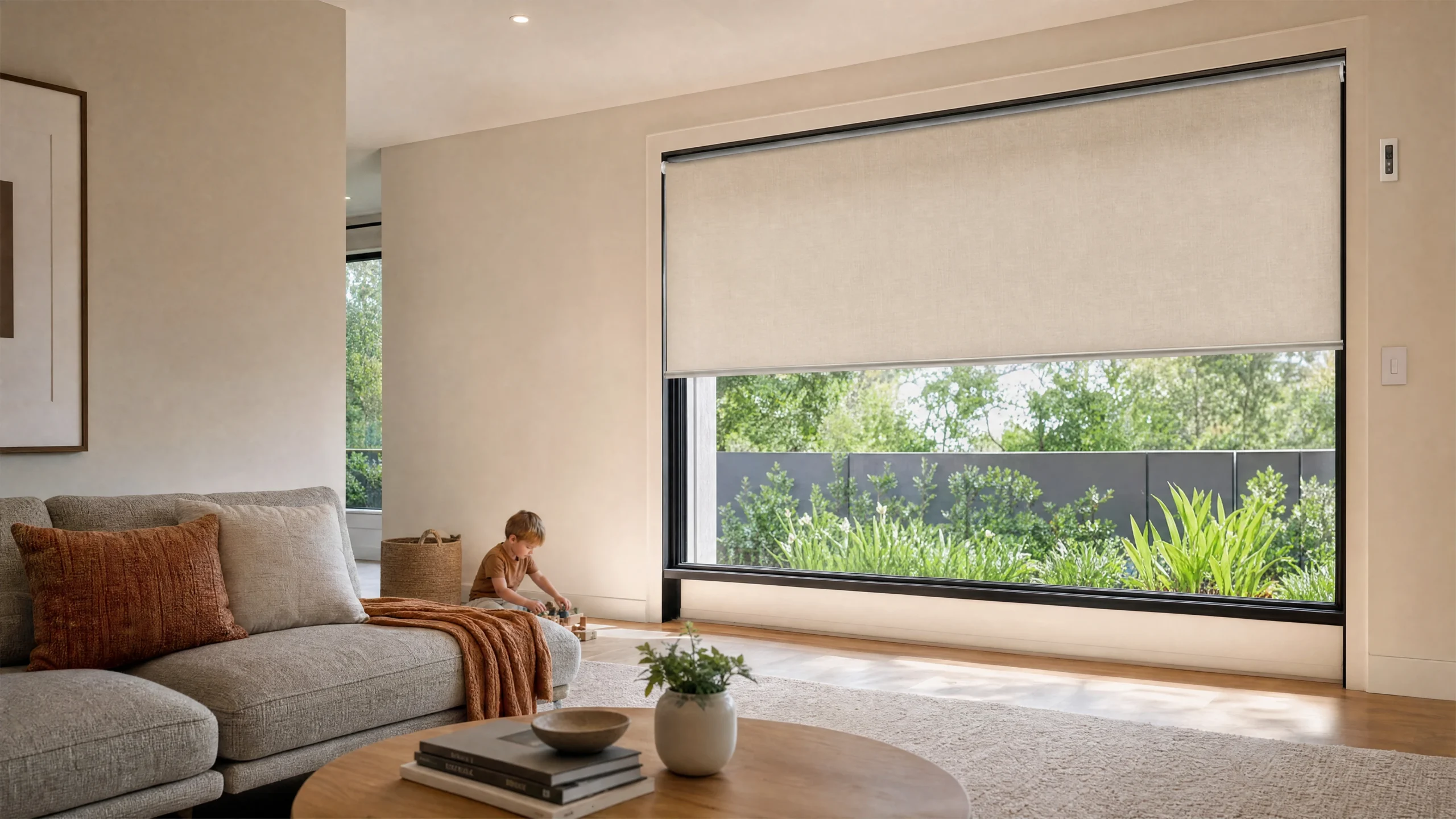
A living room window beside a sofa needs to be considered differently from a high window with no furniture underneath it. In a nursery, the cot’s position matters. In a playroom, even a small chair or storage box can give a child extra height. This is an easy detail to miss when choosing child-safe blinds because people naturally focus on the window itself. Look at the surrounding space too.
V. What Happens After the Covering Is Installed?
Safety does not end when the installer leaves. Children grow. Furniture moves. A room that was arranged one way six months ago may look completely different now. A cord that was once difficult to reach may suddenly be within reach. That is why window covering safety is worth checking from time to time. Check the cords, chains, and other operating parts, then look at what is around the window. If something has changed, reassess the setup.
Australian product safety guidance recommends keeping blind and curtain cords out of children’s reach and moving furniture away from corded window coverings.
VI. A Practical Way to Make the Choice
Before ordering a window covering, stand in the room and look at the window from a child’s point of view. Check what is reachable from the floor and what becomes reachable with nearby furniture. Then consider how much light and privacy the room needs and how often the covering will be used. This gives you a much clearer basis for choosing between curtains, roller blinds or plantation shutters.
Final Thoughts
No single window covering makes every room child safe. The safer decision comes from looking at the operating parts, the window position, and everything around it. Make that check before installation, then repeat it as the room and your child change.