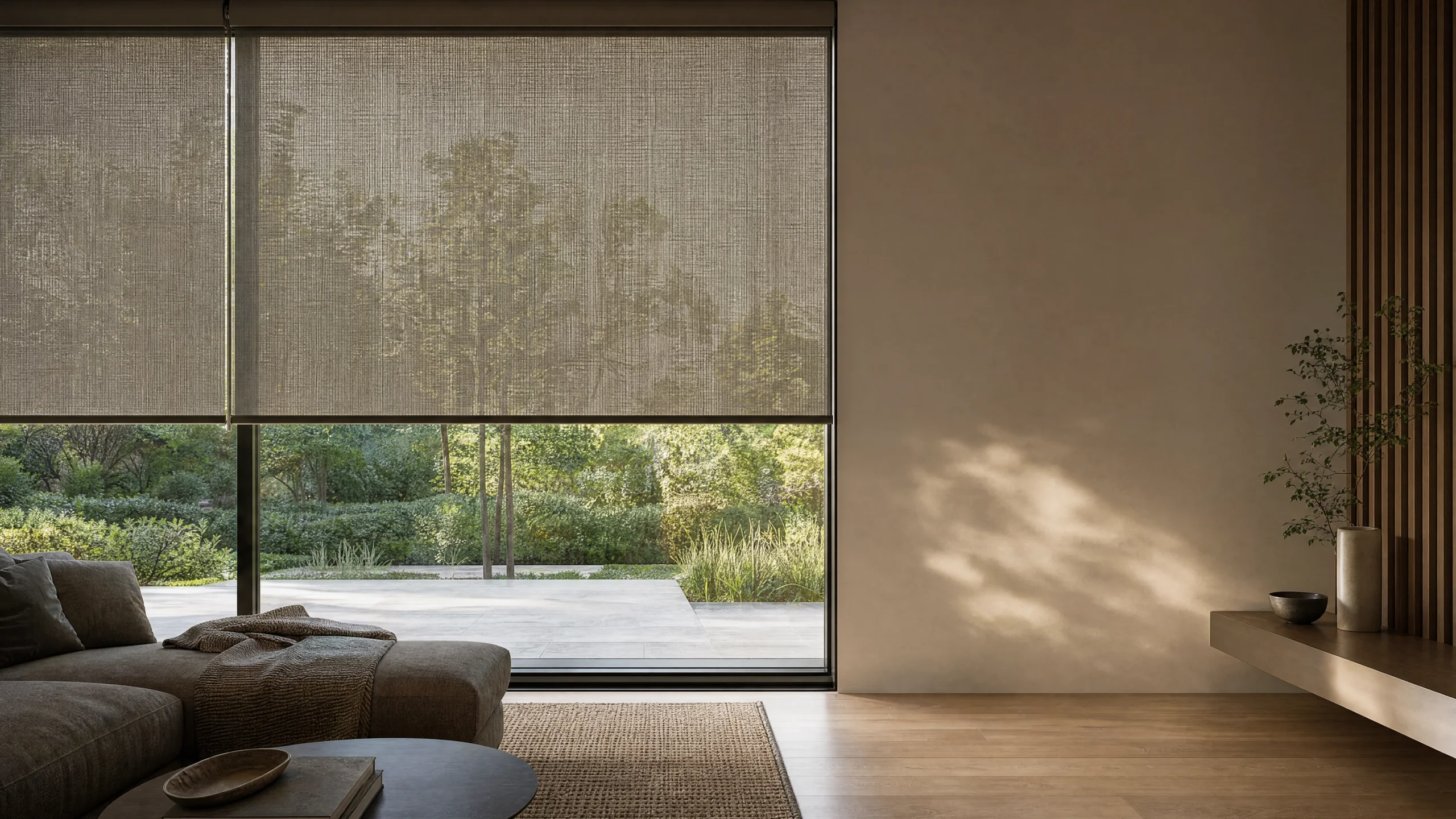
A roller blind can change what you see outside without completely covering the window. The amount of space between the woven fibres, often described as the blind’s openness, affects how much light enters and how clearly you can see through the fabric.
This matters more than many homeowners expect. Two roller blinds can look almost identical as fabric samples, yet create a noticeably different view once fitted to a window.
What Does Roller Blind Openness Mean?
Openness refers to the size of the small gaps within a roller blind fabric. A more open fabric lets in more daylight and gives you a clearer connection to the outside. A tighter fabric blocks more of the view and provides greater control over light and privacy.
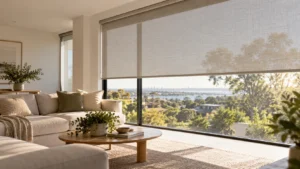
Think about a living room facing a garden. If you want to enjoy the trees and outdoor area during the day, a more open roller blind can keep the window useful even when the blind is lowered. You still get some privacy, but the view does not disappear behind a solid sheet of fabric.
For bedrooms or windows facing a neighbouring property, you may prefer a tighter fabric. The outside view becomes less noticeable, while the blind gives you more privacy.
The View Changes With the Light
Your view through a roller blind changes throughout the day.
In bright daylight, a light-filtering blind may let you see the shapes and colours outside while reducing some of the harshness coming through the glass. In the evening, the situation changes. When your room is brighter than the outside, the fabric can appear more solid, and the view becomes harder to see.
This is why choosing roller blinds based only on a fabric sample can be misleading. Look at how the material behaves in the type of light your room actually receives.
Openness Also Affects Glare
A window may offer a great view, but strong sunlight can make it uncomfortable. It can create glare on a television, computer screen or glossy surface.
A suitable roller blind fabric can soften the incoming light without making the room feel dark. The right balance depends on the window direction, the time of day when sunlight is strongest, and how you use the room.
If you are comparing different window covering options, you can explore the available window solutions before deciding which level of openness makes sense for each room.
Choose the View You Actually Want
No single openness level suits every window. A living area overlooking a backyard may benefit from keeping the outside view visible, while a bathroom or street facing bedroom may need more privacy.
The useful question is simple: when the blind is down, what do you still want to see?
That answer can make choosing the right roller blind fabric much easier.
Final Thoughts
Roller blind openness affects more than how much sunlight enters a room. It changes how connected the room feels to the outdoors, how much of the view remains visible and how easily you can manage glare and privacy. Look at the window from inside the room at different times of day before settling on a fabric. That small check can make a bigger difference than choosing a colour alone.